Teaching students the social skills to understand perspective-taking helps them learn to put themselves in another person’s shoes.
What is perspective-taking?
Perspective-taking means considering what another person may be feeling, thinking, seeing, or knowing in a given situation. Keeping in mind that each person has a unique perspective can help us approach situations with greater empathy and tact.
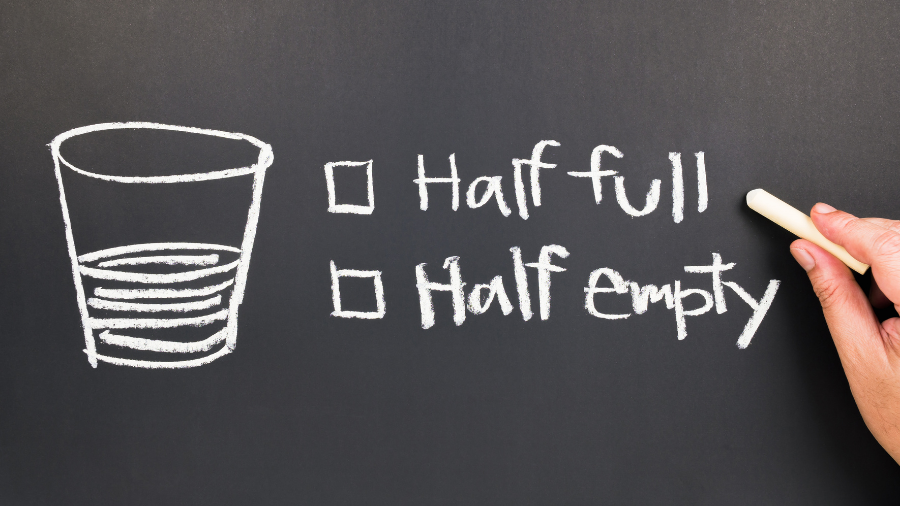
The age-old example is a glass with water in it. One person may see that glass as half full, while another person may see it as half empty. Even though two people are looking at the same thing, they may have different perspectives and experiences of that object or situation.
While it’s impossible to read another person’s mind, there are clues we can use to help us understand how they may be feeling about a situation.
Four clues to use when considering perspective:
- Facial Expressions – this might give you a guess at how they may be feeling
- Body Language – sometimes we can read a person’s body language to give us insight into how they are feeling in a situation
- Words – listen to what they’re saying and how they are saying it
- Situation – what does the person know, and do they have a certain expertise for a given situation?
Why is perspective-taking an important social skill?
Understanding perspective-taking helps us read social situations and navigate conversations with peers. If, for example, a friend is upset, it may be the wrong time to make jokes and tease them, even if that’s your normal style of communicating. It may not be the type of conversation they need in that moment.
Knowing what may be helpful and kind in a given situation will help students build and maintain lasting friendships and positive peer interactions.
Social Skills PowerPoint Presentations:
My Brain – Your Brain PowerPoint Presentation
My Brain – Your Brain Facilitator’s Guide Presentation
Perspective-Taking Resource Materials:
Understanding Perspective-Taking Outline
Understanding Perspective-Taking Teacher Note
Understanding Perspective-Taking Parent Note
Understanding Perspective-Taking Magnet Cards
Understanding Perspective-Taking Mini-Schedule
Understanding Perspective-Taking Activity
Understanding Perspective-Taking Homework
This resource was authored by Watson Institute Special Education Consultant, Andee Morris, M.Ed.
If you have any questions or concerns about the Watson Institute’s use of this information, please contact us.