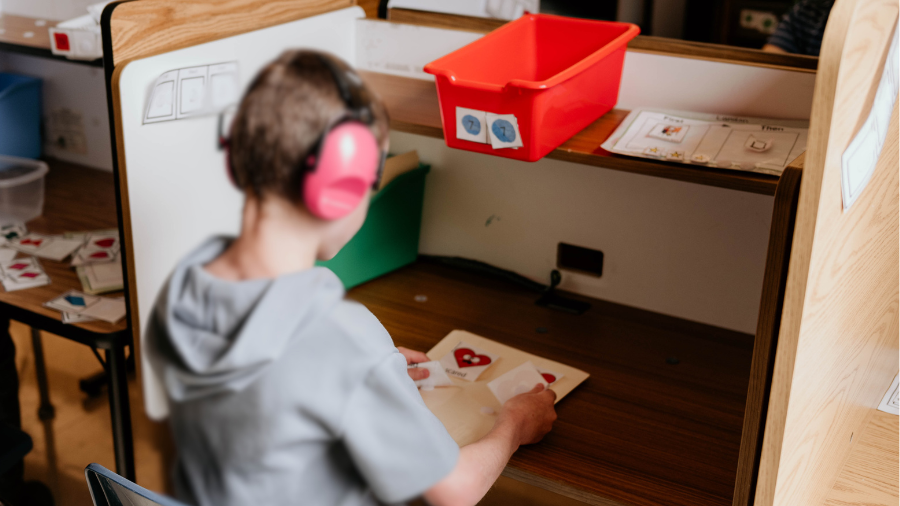
What is a Study Carrel?
A study carrel is an effective classroom accommodation to help students who are easily distracted or overwhelmed by visual stimuli (Conroy, Stichter, Daunic, & Haydon, 2008). Commercially made study carrels could also be purchased. A carrel can be made for a particular student, such as a student with ADHD or autism; however, it is a good idea to have 2-3 available in the class for other kids to use at certain times of the day. Study carrels are great for independent work, peer tutoring, test taking, and make-up work. Students can help to make and decorate them.
Example:
I have a student diagnosed with both PDD-NOS and ADHD who is in my language arts class. The student is easily distracted, and to get any desk work completed, their aide takes them into the hall or the back corner of the room. Is there a better way I can minimize distractions without having to move the student away from their peers?
Using Study Carrels to Minimize Visual Distractions
General education classrooms tend to be busy, which can be distracting to students who have difficulty paying attention. One easy solution to minimize visual distractions is to give that student their own “study carrel” for their desk. This is great for any student with attention deficits and also for students with autism who can be easily overwhelmed by visual stimuli. You could also make 2-3 classroom study carrels that can be available to any of the students to make this a classroom practice vs. an individual accommodation for one child.
Quick Facts
- Child’s Age: 6-13
- Planning Effort: Low
- Difficulty Level: Easy
Pre-requisites
- Materials needed to make a carrel
How to Create a Study Carrel
- Find large cardboard pieces (e.g., from large appliances or electronics, large shipping boxes) and bend them until you have 3 “sides”. You can also purchase a tri-fold posterboard.
- You or your students can decorate the outside or post simple visual cues on the inside of the study carrel. For example, a task list or mini-schedule of how to complete an assignment.
- Teach students the parameters of use and how to access the study carrel when needed.
- For the student with ADHD or autism, the teacher or aide may have to initially prompt usage until the student can do it independently.
Resources
This resource was authored by Watson Institute Special Education Consultant, Lisa Plastino, M.Ed.
If you have questions or concerns about the Watson Institute’s use of this information, please contact us.