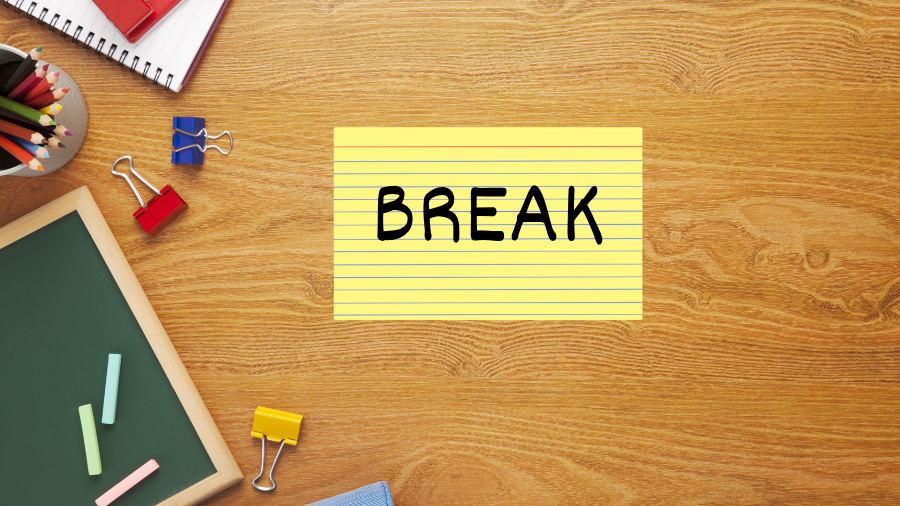
Try using a Break Card (a visual tool that signifies to a student the need to take a break from an activity) to prevent behavior issues.
What is a Break Card?
A break card is a visual that signifies the need to take a break from an activity. This could be a colored card with the word “break” on it, or a picture or object that signifies “break”.
Example:
How can I prevent a student from being non-compliant during groups or activities?
Using a Break Card
Provide a break card or something that symbolizes a break to the student.
Quick Facts
- Child’s Age: 3-18+
- Planning Effort: Moderate
- Difficulty Level: Moderate
Pre-requisites
- Information regarding how long the student CAN stay focused.
Steps for Using Break Cards to Prevent Behavior Issues
- Be sure you know approximately how long the student can remain on-task (example: 5 minutes). You may also know the student has difficulty during a specified time during the lesson or a particular subject, but taking data is the best way to ensure you know this information.
- After the specific on-task time such as 5 minutes, or at the specified ‘trouble’ time, hand the student a break card saying “You can take a break for ___ minutes.” Set a timer for the break.
- When the break time period is over, encourage the student to return to the task, indicating there are other break cards available. Set a timer for the instructional time during which they are able to focus.
- During the ‘training period,’ allow the student to take a break each time they request one. Make sure to honor requests made by the student for a break.
- After it is established that the student understands the connection, then set a specified number of break cards. For example, if instructional time is 20 minutes long and the student can focus for 5-minute increments, provide 4 cards.
- As the student’s appropriate behavior increases, slowly decrease the number of cards to your assessed criterion level.
Resources
SetBC Resources (website resource for pictures/icons)
Visual Transition Timer (related resource)
Special Interest Areas to Promote On-Task Behaviors (related resource)
Rating On-Task Awareness (related resource)
This resource was authored by Watson Institute Special Education Consultant, Katie Bentz, M.Ed.
If you have questions or concerns about the Watson Institute’s use of this information, please contact us.