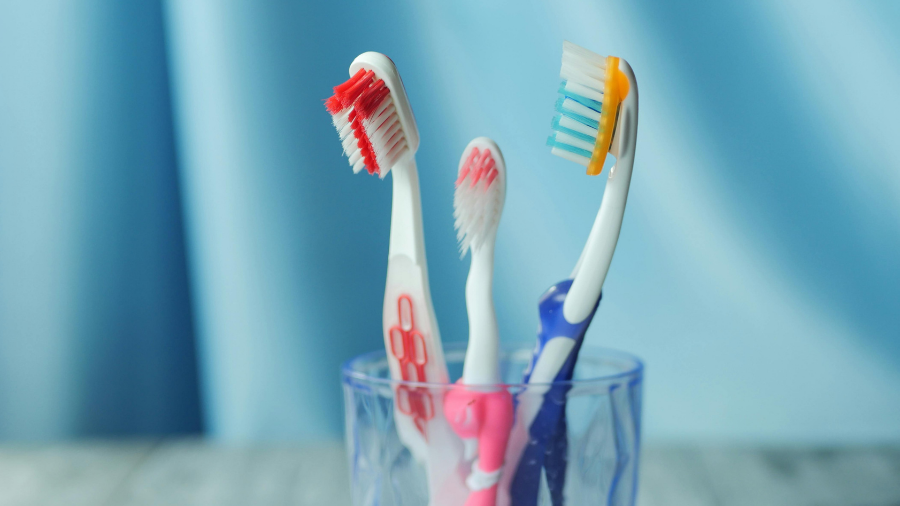
Children with disabilities may experience oral motor sensory issues. Here are strategies to help solve tooth sensitivity when brushing.
Oral Motor Desensitizing
Solving Tooth Brushing Sensitivities includes utilizing a combination of established strategies, including oral motor desensitizing, structured choices, visual supports, redirection, and reinforcement.
Example:
My child balks when it is time to brush their teeth. I think they have sensitivity to brushing. My child will cry and turn away – what can I do?
Strategies for Tooth Brushing Sensitivities
There are a number of strategies that can be used in combination if a child has a sensitivity to – or anxiety about – brushing their teeth. These strategies include:
- Oral motor activities to desensitize
- Structured choices throughout the routine to provide a sense of control
- Visual supports such as a mini-schedule
- Redirective activities such as a song
- A reinforcement item or activity upon completion
Quick Facts
- Child’s Age: 3-10
- Planning Effort: Low
- Difficulty Level: Easy
Requirements
- The ability to make choices
How to Solve Tooth Brushing Sensitivity
- Provide oral motor activities your child enjoys before it is time to brush teeth. Explore blowing bubbles, whistles, and other similar toys. Many of these items can be found in toy stores, on the internet, and in OT (occupational therapy) catalogs such as Abilitations. Provide chewy items for your child while they are watching TV or while you are reading to them. “Chew toys” are available in stores, on the internet, or in OT catalogs.
- Have choices available for your child, such as a variety of toothpastes and toothbrushes to choose from. (For some children, a choice between two items may be less overwhelming.) Allow your child to make a choice before brushing.
- Use a mini-schedule to help your child see the beginning and end of the routine. At the end of the schedule, include an activity or item the child enjoys as a positive reinforcer for brushing.
- Take turns with your child, allowing them to start with just water, then take turns with the toothpaste.
- Explore using a rhyme or song during brushing. Such songs can be found on the internet. One example is: “Top to the left, top to the right, top to front so it shines like a light. Bottom left, bottom right, bottom front, what a beautiful sight.” If you have a playlist of favorite songs, consider playing this during tooth brushing. You may even have a video playing during toothbrushing. It is a good idea to have these items available only at “toothbrushing” time to provide further incentive.
- When finished, have a reinforcing activity or item available. Pair this with enthusiastic verbal praise.
Resources
southpawenterprises.com (sample retail site to purchase oral motor items)
school specialty store (sample retail site to purchase oral motor items)
Setbc Resources Picture Set (website resource for pictures/icons)
do2learn.com (link to website and picture cards for toothbrushing/visual schedule)
This resource was authored by Watson Institute Special Education Consultant, Vanessa Thomas, M.Ed., BCBA, LBS
If you have questions or concerns about the Watson Institute’s use of this information, please contact us.