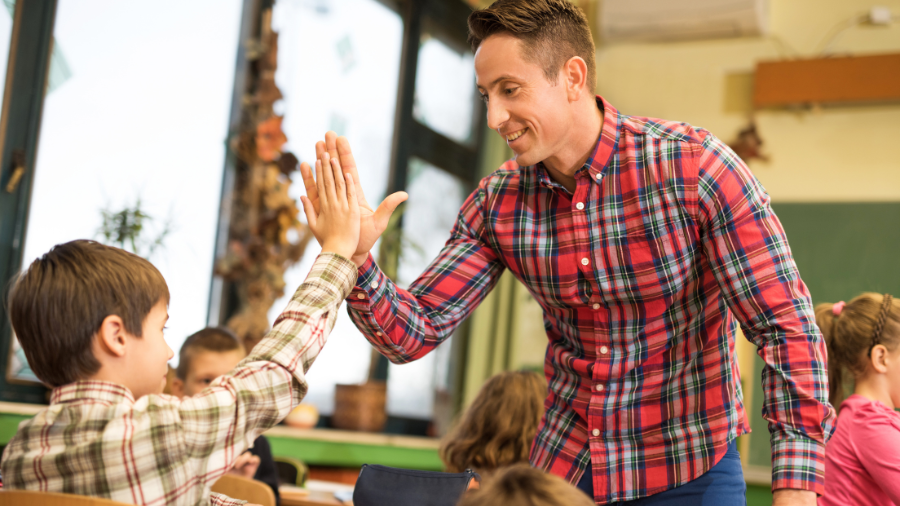
Helping students recognize and celebrate their unique strengths in the classroom has a multitude of benefits for their social-emotional development. Every child has something that makes them special.
When students feel supported and celebrated for what makes them special, this can help them build:
- their sense of self-awareness
- pride
- a strong sense of identity
Helping students see that their ideas, interests, and abilities are valued helps to strengthen their confidence, resilience, and willingness to try new things. Highlighting the uniqueness of all children builds social awareness, empathy, and the appreciation and celebration of differences in others.
What are ways educators can celebrate students’ strengths?
Involving families and peers, naming strengths in the moment, and reading books are just a few of the countless ways to celebrate students’ strengths in the classroom.
- Involve Families: Families are experts on their children and have insights that may not be immediately visible to educators and classroom staff. One meaningful way to involve families is by sending home a questionnaire inviting them to share more information about their child as an individual.
Considering including questions such as:- What makes your child special and unique?
- What are a few of your child’s greatest strengths?
- What makes you most proud of your child?
This not only helps educators learn interesting, new, and valuable information about their students but also communicates to families that their child is seen, valued, and appreciated as an individual.
- Involve Peers: During group times, invite your students to share a compliment or something they noticed a classmate doing well. This practice helps build a sense of community amongst peers while also teaching children positive and respectful ways to give feedback.
- Name students’ strengths in the moment: when you “catch” a student using a skill like kindness, creativity, persistence, or curiosity, call it out and explicitly name what you’re seeing in the moment. For example, “You kept trying to build that block tower even when it kept falling. You were so persistent!” or “You helped your friend clean up the toys, and that shows how caring you are!”
Being very specific helps children connect their actions with positive character traits and fosters a sense of pride in developing these qualities. - Read books celebrating uniqueness: reading books that focus on themes celebrating unique, individual strengths can spark conversations that help children understand, notice, and appreciate that everyone has talents, interests, and abilities that make them special.
A few book suggestions that center on this theme include:- “Just Ask! Be Different, Be Brave, Be You” by Sonia Sotomayor
- “I like Myself!” by Karen Beaumont
- “All Are Welcome” by Alexandra Penfold
- “Giraffes Can’t Dance” by Giles Andreae
- Create a class book: ask each student to draw a self-portrait and complete the prompt: “I am special because: .” Compile all of the portraits into a booklet that you read together during group times. When the book isn’t being used, make sure it is stored in the classroom in an area that’s easily available for your students so they can access it on their own when they want.
We all have qualities that make us special and unique. Teaching children to recognize and appreciate their own strengths and the strengths of their peers lays the foundation for a more inclusive and empathetic society.
This social emotional learning resource to help children name and recognize feelings was authored by the Watson Institute’s special education consultant, Katie Bentz, M.Ed.
If you have questions or concerns about the Watson Institute’s use of this information, please contact us.