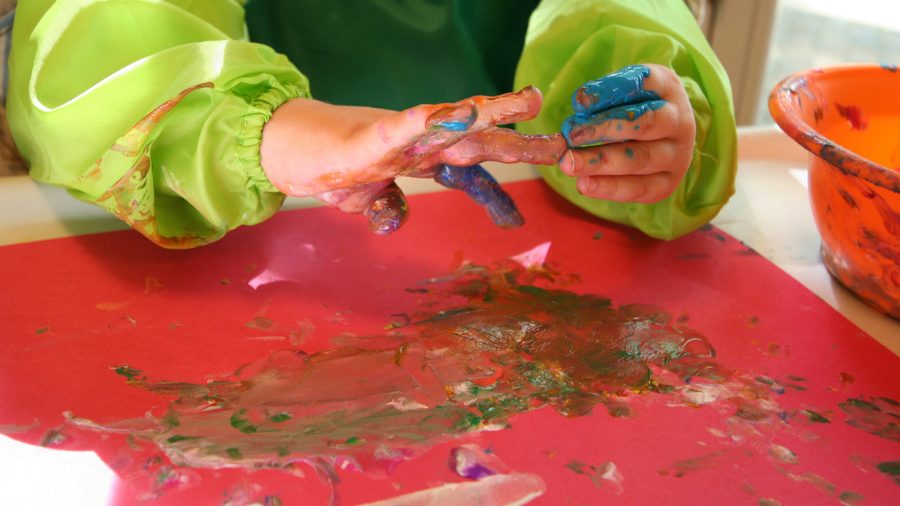
Providing adaptations, shaping, and choice control to sensory activities for children are strategies to help them with tactile defensiveness.
Tactile defensiveness is a neurological response that can create hypersensitivity to the feel of certain textures, including paint, sand, textiles, or foods.
What are Solutions for Tactile Defensiveness?
Adaptations / Alternatives
Adaptations of an activity engage the student with similar materials in a more ‘doable’ manner. Alternative activities are activities that are different but may parallel the challenging task.
Shaping
Shaping refers to modifying behavior by reinforcing closer approximations of the desired behavior.
Choice control
Choice control is a strategy that gives children control over situations when they feel at a loss or ‘out of control’.

Example:
A three-year-old I am working with does not like the feeling of paint. They have just recently been diagnosed with Autism. What are some sensory activities I can do with this preschooler to help them out?
Interventions for Dealing with Tactile Defensiveness
Providing adaptations or alternatives, strategies to shape engagement, and structured choices are interventions that can feel like safe solutions to a child dealing with tactile defensiveness and can simultaneously promote inclusion with peers. Alternatives that include other preschool tactile experiences that are ‘acceptable’ to the student can assist in developing a tolerance to the painting or other experiences.
Quick Facts
- Child’s Age: 3-10
- Planning Effort: Moderate
- Difficulty Level: Moderate
Process for Adapting Sensory Activities
- If the painting activity is finger painting, adapt this activity by offering ‘tools’ to use instead of the child’s fingers or hands. Model and verbally describe what is happening while using items in the paint, such as a paintbrush or stylus. Explore using rubber fingertips found in any office store. Model using the tips first, then offer your student a turn.
- Model finger painting for the child, asking them what to make. State you are only going to use one finger. Talk about the picture as you paint, continuing to ask questions of what should be next. When it appears the child is comfortable with this format, state: “I’m going to keep using one finger. Do you want to try one or two fingers?” If the child tries one finger, ask questions such as “Do you want a wet towel or dry to wipe your finger when you are finished?” Provide verbal reinforcement each time the child attempts. Continue with attempts to have them try 2 or 3 fingers. Never force participation.
- If the child wants no part of the activity, provide alternatives such as sand, water, and rice play. You can structure these activities by placing items inside a bin of tactile material and have a checklist to locate specified items. Other possible alternatives that might be acceptable to the child and will be closer to the tactile activity of painting include pudding finger paint, shaving cream, funny foam, or bathtub crayons
- Always provide opportunities for structured choice questions as you work with the student. For example: Do you want to use shaving cream or funny foam today? Do you want to use one finger or two? Do you want to use the paintbrush or the stylus? Such questions are calming and give the child a sense of control.
- There are sensory programs and protocols for students with tactile defensiveness. An Occupational Therapist should be consulted for such programs.
Resources
Strategies for Coping with Sensitivity to Smells (related answer on this site)
This resource was authored by Watson Institute Special Education Consultant, Katie Bentz, M.Ed.
If you have questions or concerns about the Watson Institute’s use of this information, please contact us.