Prepare children with special needs for new situations & meeting people with these suggested social stories and behavior interventions.
How Do Social Stories Help Children with Everyday Situations?
A behavior or social story is a simple description of an everyday social situation written from a child’s perspective. The situation is described and focuses on important social cues and expectations and ways for the child to react in the situation. The social stories are used with a child prior to an event and rehearsed so that when the event occurs, the child can use the story as a guide for behavior.
Shaping means rewarding successive approximations for a desired behavior; in this situation, shaping is used to increase interactive play.
Structured choice option is a behavior intervention that gives a student a sense of control over a situation by providing choices. Structured choice interventions are used to prevent or de-escalate interfering behaviors and to increase appropriate behaviors. In each of these interventions, use of the child’s special interests and visual supports increases chances for success.
Example:
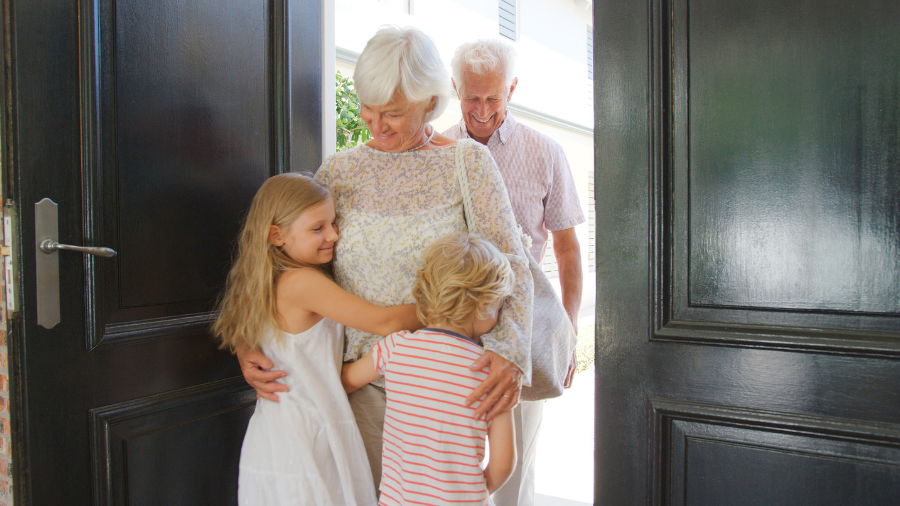
A grandparent is going to visit their non-verbal, six-year-old grandchild. The grandparent only sees the grandchild once a year in their “space” but only knows them from their online visits. During the in-person visit, the grandparent always tries to approach the grandchild gently until the grandchild acknowledges them. The grandparent only gets this limited in-person time and wants things to go smoothly. What are some tips on making this process easier for the grandchild?
Using Social Stories and Behavior Interventions
Changes to routine or schedules can be difficult for children with special needs.
There are a number of possible strategies to utilize to decrease anxieties during a new or novel situation and to increase positive experiences. This answer will highlight a few strategies to try, including:
- Create a simple social story that may include photos of the child and the visitor. Include a choice of toys and activities that can be used with the visitor and allow the child to choose.
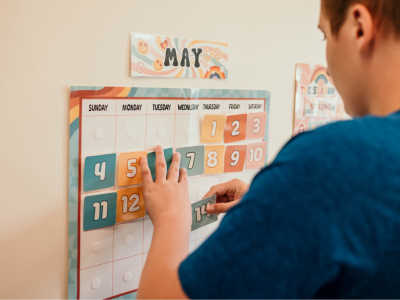
- Use a visual calendar or countdown to indicate when the visitor will arrive.
- Keep excitement levels low when guests arrive to prevent undue anxiety.
- As a visitor, if you are playing with the child with special needs, slowly hand items to the child, and if they engage with you, start using shorter phrases to describe the play, using “your turn”.
- Use choices and high-interest items in a calm and quiet setting to promote positive experiences for the child and the visitor.
Each behavior intervention employs structure with visual supports.
Quick Facts
- Child’s Age: 3-10
- Planning Effort: Moderate
- Difficulty Level: Easy
Pre-requisites
Child must have the ability to understand simple stories; ability to express needs and wants (verbally or non-verbally)
How to Prepare a Child for Visitors:
- Create a simple social story to prepare for the visit. If possible, include photos of the child and visitors, in this case, the grandparent. See the Resource Section for an example that can be individualized. Have the child’s parent read the story to him before the visit.
- If the child has utilized calendars or understands numbers, use these items to indicate when the visitor will arrive. A picture can be placed on the calendar and each day can be crossed off until the arrival time. Or, a Velcro line of numbers with the picture at the end can be created; pulling off each number as the days go by [‘Your grandparent comes in 10 days’].
- Upon arrival of the visitor, keep excitement levels low to prevent undue anxiety regarding the unknown.
- After some time has elapsed and using high interest items, the visitor may wish to show pictures or verbally ask, holding out the items, what the child would like to play with. Provide only 2-3 choices and be sure any communicative devices that are utilized are available for the child to access.
- Items such as bubbles, cars that go down ramps, puzzles, and simple art projects including bingo daubers can promote interactions including turn-taking and opportunities to communicate with the visitor.
- When setting up such play situations, begin by sitting near the child and start the activity in a parallel play format (engaging near the child but not yet playing with them). Slowly hand objects without high rates of verbalization. If the child begins to engage, start saying short phrases describing the play and using ‘your turn’ as part of your communication.
- Be sure the materials are organized and provide visual supports such as ‘x’s’ on art papers indicating where to glue or paint.
- Remember, using choices and high-interest items in a calm and quiet setting can promote positive experiences for everyone involved.
Preparing a Child for Visitors Resources
Taking Turns in Play and Conversation (Related answer on this site)
Structured Choice (Related answer on this site)
Don’t Just Act…Interact (Book resource)
Grandma is Coming! (Behavior / Social Story) (Word document)
This resource was authored by Watson Institute Special Education Consultant, Andee Morris, M.Ed.
If you have questions or concerns about the Watson Institute’s use of this information, please contact us.