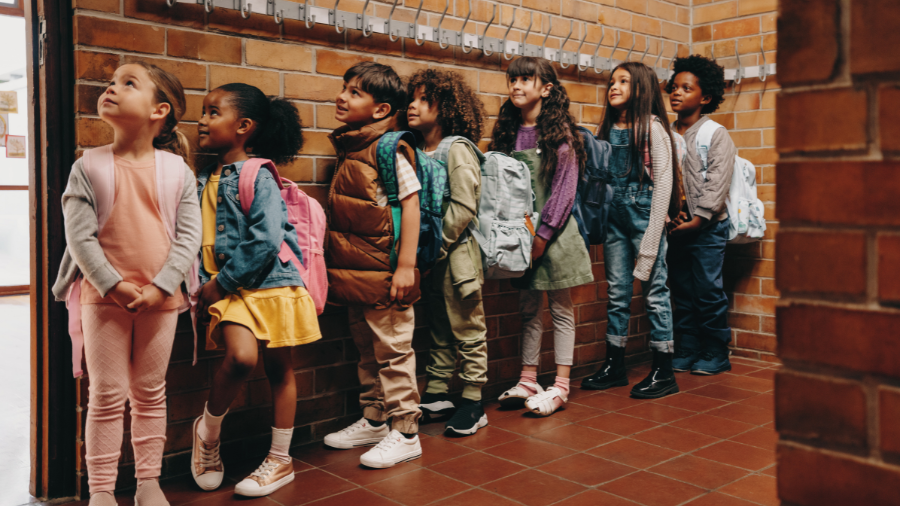
Changes can be hard for children of all ages, but particularly for young children. Whether you’re making a major transition, moving into a new house or school, or a smaller transition from one activity to a new one. Helping children transition between activities can ensure your classroom or home operates smoothly.
Why are transitions difficult for kids?
Whether you’re moving from playtime to cleanup or from recess outside to lessons indoors, transitions between activities can be difficult for kids and spark big emotions. When children move from one activity to another, they are often asked to stop doing something they are enjoying, shift their attention, follow a set of directions, and adapt to a new set of expectations.
Young children have a more limited understanding of the abstract concept of time, so transitions can be extra challenging. Teaching your students how to handle transitions between activities with opportunities to practice social and emotional skills that will help them successfully navigate their days for years to come!
What are strategies to support smooth transitions?
There are many strategies to support smooth transitions throughout the day for your students. The following options help children know what to expect, reducing anxiety and frustration, and setting the stage for successful transitions.
1. Establish Consistent Routines
Children thrive when they can depend on a predictable sequence of events or a consistent routine. Knowing what to expect next helps students feel safe and secure, reducing the frustration and anxiety that can accompany transitions between activities. As routines become families, children begin to anticipate upcoming activities, making it easier to move from one to the next.
Make this strategy even more effective by using visual supports! This is especially helpful for children with autism who often process information more effectively through visual rather than verbal cues. Providing a visual sequence of events helps children to “see” the passage of time more concretely. Visual supports might include a visual daily schedule, first/then boards, individual schedule strips, or visual choice boards for transitions.
2. Give Advanced Warnings
Providing multiple warnings gives children an opportunity to mentally prepare for an upcoming change. For example, you could say, “In five minutes we’re going to clean up our toys!”, then, “Two more minutes until it’s time to clean up our toys!”, counting down to the final notice of, “It’s time to clean up our toys!”
Providing advanced and continued notices allows children time to wrap up their play and prepare to transition to the next activity.
3. Use Visual Timers
Using a visual timer allows children to “see” the passage of time, helping the abstract concept to become more concrete and tangible. Since many younger children don’t quite grasp time or words like “later” or “soon”, we can help children prepare for an upcoming transition by using visual timers.
Sand timers, online visual timers, countdown clocks, timers on your phone or tablet, red/yellow/green visual timers, and countdown timers are all excellent ways to help children visualize how much time is left before they need to transition to the next activity.
4. Incorporate Transition Songs
Music provides a predictable cue that a transition is happening! Select a song that will serve as your classroom’s transition song, and be sure to play that same song each day when it is time to transition.
While your students are cleaning up, washing their hands, lining up to go inside/outside, being seated for circle/group time, or packing up to say goodbye, the transition song should be playing to set that consistent expectation for your students. Most children enjoy the fun and repetitive nature of songs! When consistently incorporated into routines, they can serve as an excellent support to facilitate smoother transitions.
5. Make Transitions Interactive
Keep things fun and engaging by incorporating movement or activity to facilitate the transition and reduce wait time between activities. Children can follow the leader to the snack time area, choose which animal they would like to emulate as they walk over to the circle time area, or pick a partner to line up with to go outside.
Providing children with small choices gives them a sense of control while still maintaining the expectation that a transition will occur.
The best part about all of these strategies is that you can use them all together or pick and choose which ones work best for your students! Not only that, they can be implemented easily in the classroom and at home.
Be sure to reduce wait time, praise successful transitions, and provide individual support where needed. With a little bit of support, you can help children go from struggle to success, helping them feel confident in their ability to successfully navigate the many transitions that happen throughout their day.
These special education resources for accepting change were authored by the Watson Institute’s special education consultant, Katie Bentz, M.Ed.
If you have any questions or concerns about the Watson Institute’s use of this information, please contact us.