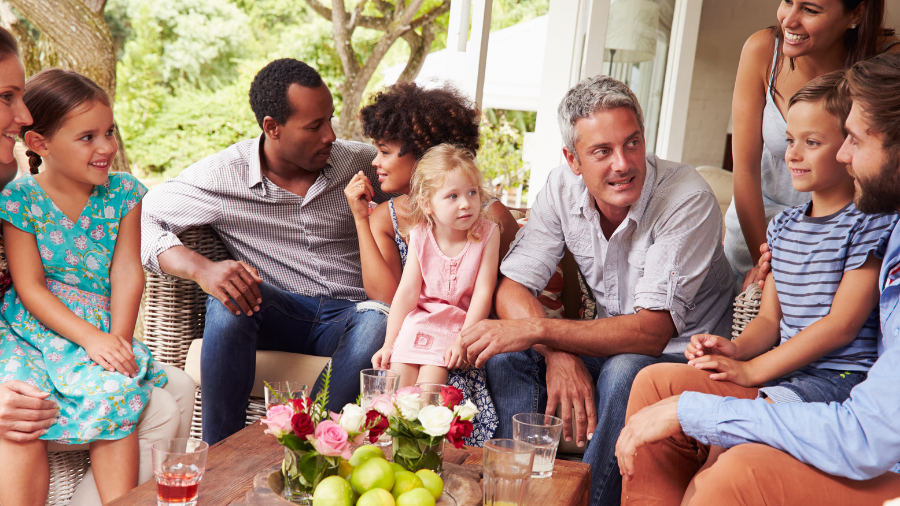
Help with Family or Community Gatherings
Many children struggle with situations such as community outings, group family events, and/or visitors to their homes. These situations often include wait time without engagement activities for children or unstructured settings. Both components can pose challenges for children.
A few simple strategies can promote positive outcomes. These include structuring the environment, planned activities, use of simple schedules, and reinforcement for expected behaviors.
Example:
My children have difficulty behaving in restaurants and during family events. What can I do to help them?
Child Behavior Strategies for Family or Public Places
- Structuring the environment indicates adding structure to promote positive behavior.
- Planned activities are part of structuring the environment and decrease wait time, which can be an ‘antecedent’ or cause of interfering behaviors.
- A schedule refers to the presentation of a list that communicates a series of activities required for a specified time period. Schedules are often supplemented by reinforcement.
- Reinforcement is the delivery of a favorite item or activity that follows a behavior, increasing the likelihood of the continuation of a behavior.
Quick Facts
- Child’s Age: 3-10
- Planning Effort: Moderate
- Difficulty Level: Easy
Pre-requisites
- The ability to understand visual sequence of events and communicate favorite items/activities
- The ability to understand expectations for a situation
Steps for Implementing Child Behavior Strategies
- Plan ahead for such events in order to make the situation ‘doable’ for your child. For example, if it is a restaurant outing with many people, plan to use multiple tables so the child is within a smaller group. If a large family event is scheduled or visitors are arriving at your home, plan to have your child greet everyone, then proceed to structured planned activities for them away from the large group. Some families use a neighbor caretaker/babysitter for such events.
- Plan to bring or have favorite and/or novel activities for the child before the event. Include them in the planning of items/activities. If art activities are a favorite pastime such as painting or coloring, purchase new crayons or paints just for the event, to promote excitement or anticipation. If your child uses an iPad, purchase a new game or video that will only be available during the event.
- Create a schedule for the event with pictures or words for your child depending on their age and have them be responsible for using the schedule.
- Create a list of expected behaviors with just 2-3 expectations such as: Use an inside voice, use your schedule, use nice/appropriate words or language. Plan ahead with your child regarding these expectations, providing a reinforcer at the end of the event. This can be a tangible item or time with a favorite person or activity.
- Decreasing wait time and providing structure with planned activities that are manageable for a child increases prospects for a happy event. And remember, use more praise and less correction!
Resources
Seat Sheet and Collector Cards: Restaurant (related answer on this site)
Behavior Story: Restaurant (related answer on this site)
What to do with Wait Time: Community (related answer on this site)
Managing Behaviors in Public Settings (related answer on this site)
This resource was authored by Watson Institute Special Education Consultant, Andee Morris, M.Ed.
If you have questions or concerns about the Watson Institute’s use of this information, please contact us.