When speaking with your students / children isn’t effective, try Visual Perspective Taking to help them understand how their behavior affects others.
What is Visual Perspective Taking?
Visual Perspective Taking is a fun, cartoon-like format that enables students to see how their comments and behavior may impact others. Some students have difficulty understanding that their words or actions might bother their classmates or teachers. When verbal discussions with the student aren’t effective, try Perspective-Taking using visuals to help them understand how others feel.
An educator has a student who tends to make comments to classmates and teachers that result in hurt feelings, confusion, and ultimately avoidance (i.e., “Your shirt is ugly”, “This is stupid”, etc.) He seems to want to make friends and be liked by his teachers and classmates, but these comments are really bothering the people around him. How can I help this student understand how his behavior affects others?
A Visual Perspective Taking Strategy
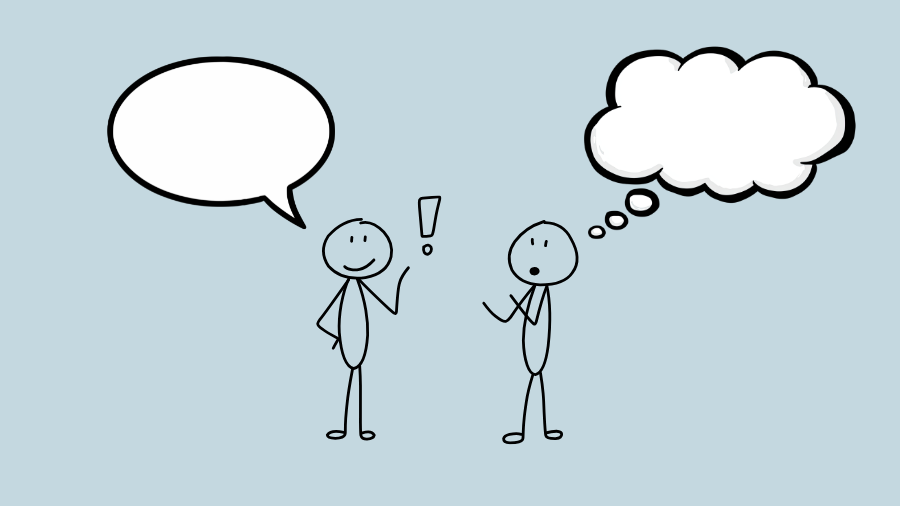
Using the Visual Perspective-Taking (*see How-to below), have your student write their comments in the ‘conversation balloon’ and possible thoughts of the other person in the ‘thought bubble’. Talk with your student / child about the way their words might make others feel and what they could say instead.
Quick Facts
- Child’s Age: 6-18+
- Planning Effort: Moderate
- Difficulty Level: Easy
Perspective Taking Requirements
- Verbal skills
- Reading skills
How to Use Visuals for Perspective Taking
- Draw two stick figures: one with a conversation balloon and the other with a thought bubble. (Laminate the drawing so that it can be re-used with a dry-erase marker for different situations.)
- Meet with your student and write his comment in the conversation balloon.
- Help him come up with possible thoughts the other figure might be having in response to his comment. Write these in the thought bubble and talk with your student about each feeling.
- In a second frame, draw the same two stick figures and conversation balloons and thought bubbles. This time, however, brainstorm with your student about positive things he could say instead, and help him come up with possible feelings and responses for the other stick figure.
- Use this format as a prevention strategy to help your student enter a social interaction successfully and/or as an intervention strategy to help him understand what went wrong and what he could do differently next time.
Visual Perspective Taking Resources
Talking bubbles PDF (link to Jill Kuzma’s website – talking bubbles visuals)
This resource was authored by Watson Institute Special Education Consultant, Phil Mauskapf, MS, MT-BC
If you have questions or concerns about the Watson Institute’s use of this information, please contact us.