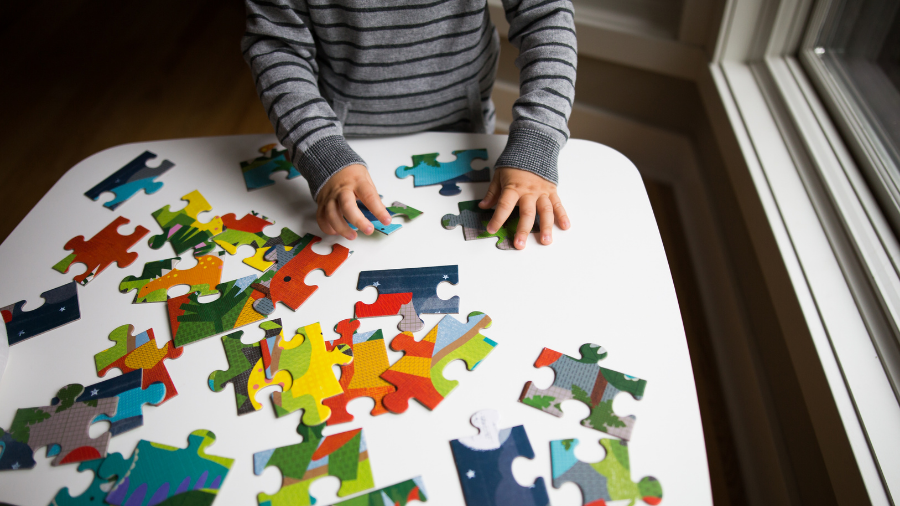
Engaging children in problem-solving play helps them build persistence, learn independent thinking, and become confident in their abilities.
Trying again when met with challenges can be a difficult skill for children to learn. Fortunately, play offers endless opportunities to practice persistence, whether through building a tower of blocks, finishing a puzzle, or learning to tie shoelaces.
Persistence is a particularly important skill that goes beyond the idea of “keep trying until you get it”. It helps children learn how to respond appropriately when met with challenging, frustrating, or unfamiliar experiences.
Teaching persistence also supports the development of valuable social and emotional skills, such as self-management, responsible decision-making, problem-solving, and confidence-building.
What does it mean to be persistent?
Persistence is more than simply trying the same thing over and over again. We can help children understand that persistence means staying engaged with something that may feel challenging while using strategies to keep themselves going.
Persistence does not mean to keep going when you’re feeling overwhelmed. Sometimes persistence means taking a break or asking for help and coming back to try again later.
Persistence can look like:
- trying a different way
- using a helpful tool
- asking for help
- taking a break
- watching someone else and learning from their approach
- breaking a task into smaller steps
Teaching children that there are numerous ways to persist helps them become more flexible and confident problem-solvers.
How to teach problem-solving through play
Create opportunities for children to practice problem-solving and resilience by engaging in play. Activities that are challenging but achievable present situations in which children may become frustrated if they don’t catch on right away.
Try:
- puzzles
- building materials
- simple mazes
- opening containers
- completing a craft
- learning a new game
When a student gets frustrated, resist the natural temptation to step in and solve the problem for them. Instead, pause and allow them to think through what they might try next.
You can level up play by providing simple challenges that encourage children to find multiple solutions. For example, provide your students with a certain number of building blocks, asking them to build a structure. Once it’s built, ask them to try again but using a different component, whether that’s more blocks to make it taller or wider, or to create a different shape of structure.
Engaging in play helps children discover that there is often more than one way to solve a problem. Students develop creativity, flexible thinking, and the confidence to keep working through challenges.
Read Books that Show Characters Persisting Through Challenges
Beyond creating play scenarios using puzzles, mazes, and crafts, other types of play can be used to teach children problem-solving, such as reading books that show characters persisting through challenges.
Books and stories provide wonderful opportunities to teach children important skills like persistence and the feelings often associated with challenging experiences.
When you’re reading a story, ask your students a few questions about the characters:
- What did the character experience that was challenging?
- How did the character feel when things got tough?
- Did the character give up?
- What did the character try instead?
- What would you have tried?
- Have you ever been in a situation like the character? What did you do?
Talking about characters who experience frustration, make mistakes, and try again helps children recognize that struggling is a normal part of learning and growing, and they’re not alone. It also allows them to think about strategies they can use when they encounter their own challenges.
Create a Persistence Toolbox
When children get stuck and aren’t sure how to proceed through a problem or a frustrating situation, having a Persistence Toolbox at their disposal can help them with problem-solving.
A Persistence Toolbox should include reminders and visual representations of strategies to try when problem-solving.
The reminders in the toolbox could include:
- ask a friend for help
- try a different way
- watch someone else do it and try their strategy
- take a break and try it again later
- ask an adult for help
When a student gets stuck, instead of immediately stepping in and telling them how to solve the problem, ask them which tool might help. Encourage them to think through their options and reference their toolbox.
This gives children an opportunity to make choices, practice problem-solving, and become more independent. It also reinforces an important growth mindset message that when something doesn’t work, it doesn’t mean we can’t do it; it may mean we need to try something different.
Persistence is a skill we can practice!
Persistence isn’t about never giving up. It’s about learning how to respond when something is difficult. Through everyday play and meaningful interactions, we can help children learn that challenges are a natural part of learning.
When children have opportunities to practice persistence in a supportive environment, they develop important social-emotional skills including:
- confidence
- resilience
- flexible thinking
- problem-solving
- emotional regulation
Most importantly, we can help children learn: “I might not be able to do it yet, but I can figure out what to try next!”
This resource was authored by Watson Institute Special Education Consultant, Katie Bentz, M.Ed.
If you have any questions or concerns about the Watson Institute’s use of this information, please contact us.