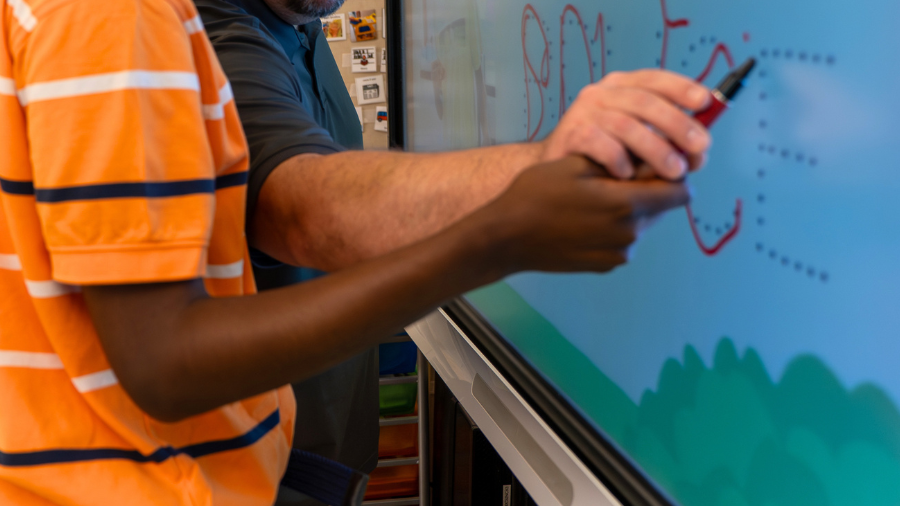
This special education resource defines, provides examples, and how-to strategies for assent physical prompting.
What is Assent Physical Prompting?
Assent Physical Prompting refers to a student’s voluntary, active agreement to participate in an activity or interaction. Students can display assent both verbally through their words and non-verbally through their body language and expressions. Smiling, saying “Yes”, or approaching are some common assent behaviors.
Assent Physical Prompting withdrawal refers to a student’s communication of disapproval or unwillingness to continue in an activity or interaction. Saying “No”, pulling away, and leaving the area are common examples of assent-withdrawal behaviors.
Physical Prompting Example:
An educator is using a prompt hierarchy from most to least with a student to teach eating with a spoon. But whenever the educator does hand-over-hand, the student jerks their hand away – how can the educator teach them?
Assent Physical Prompting Strategy
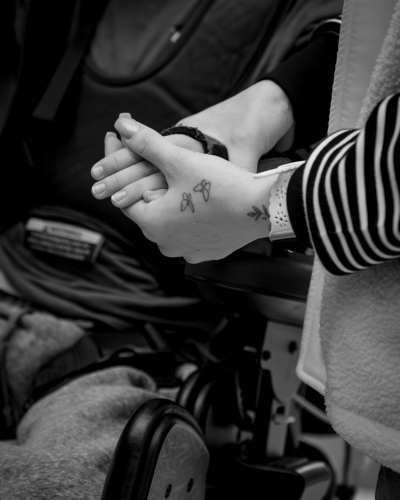
Use careful observation to note how to individualize prompting for students. Observe and note what the student can tolerate or cannot tolerate and what the student’s signs of assent and assent withdrawal look like.
When physical prompting is difficult for a student to tolerate, consider holding items near a student’s hand to allow the student to initiate contact first, using hand-under-hand prompting, or delivering the prompt in another location, such as at the elbow or arm.
Quick Facts
- Child’s Age: 3-10
- Planning Effort: Low
- Difficulty Level: Easy
How to Provide Physical Prompting:
- Observe and make note of your student’s assent and assent-withdrawal behaviors. What does your student look like when they are comfortable and engaged? How does your student show displeasure or that they would like an activity to end?
- Before introducing hand-over-hand prompting, try offering the spoon and allow the student to begin to engage with the spoon “on their own terms”. Providing the student space and time to assent and initiate with the spoon may reduce resistance to prompting and support to use it to eat.
- Consider hand-under-hand prompting, in which the teacher’s hand is placed beneath the learner’s hand (rather than on top) while guiding the learner to complete the skill. This method allows the learner to maintain control over his/her movement and can be preferable for many learners.
- Adjust where your prompt is delivered; consider delivering guidance above the hand at the forearm or elbow, or act as a “shadow”, an approach in which your hands are near but not touching the learner’s unless needed, and “shadow”/move with the learner as their hand moves.
- If assent-withdrawal behaviors are observed, pause the teaching session and, if applicable, support your student to communicate their need for a “break” or to be “all done” using their voice, a device, or other methods.
- In this case, consult with an occupational therapist regarding adaptive feeding equipment that may be more accessible for the student. Adaptations like modified grips, straps or handles, or various shapes, sizes, and weights of spoons may help your student eat more independently.
Documents and Related Resources
This resource was authored by Watson Institute Special Education Consultant, Rachel Schwartz, Ph.D., BCBA-D
If you have questions or concerns about the Watson Institute’s use of this information, please contact us.